An Empirical Study of 5,314 Jev Projects: What Developers Actually Build and Where Value Lies
Published: 2026-09-25
An empirical deep dive into 5,314 real-world Jev repositories and demos. Discover why over 51% of applications cluster around safety gates (20.6%), action controllers (19%), and routing (12.1%), how cheap decisions enable 100% full-volume screening, and where the economic moats lie.
Step 1
The real numbers: Cleaning 5,314 project records across 9 directories
In the first two weeks following Jev's release, social media buzzed with speculation. To separate hype from engineering reality, Jinqiu Research collected 5,314 raw records from 9 community directories. Multi-stage deduplication identified 1,912 core unique applications and 1,531 verifiable code repositories. The data reveals that Jev is neither an all-purpose replacement for LLMs nor a novelty toy: it functions as a high-frequency specialist placed at critical software bottlenecks.
Step 2
Over 51% of real-world usage clusters into three functions: Gates, Controls, and Routing
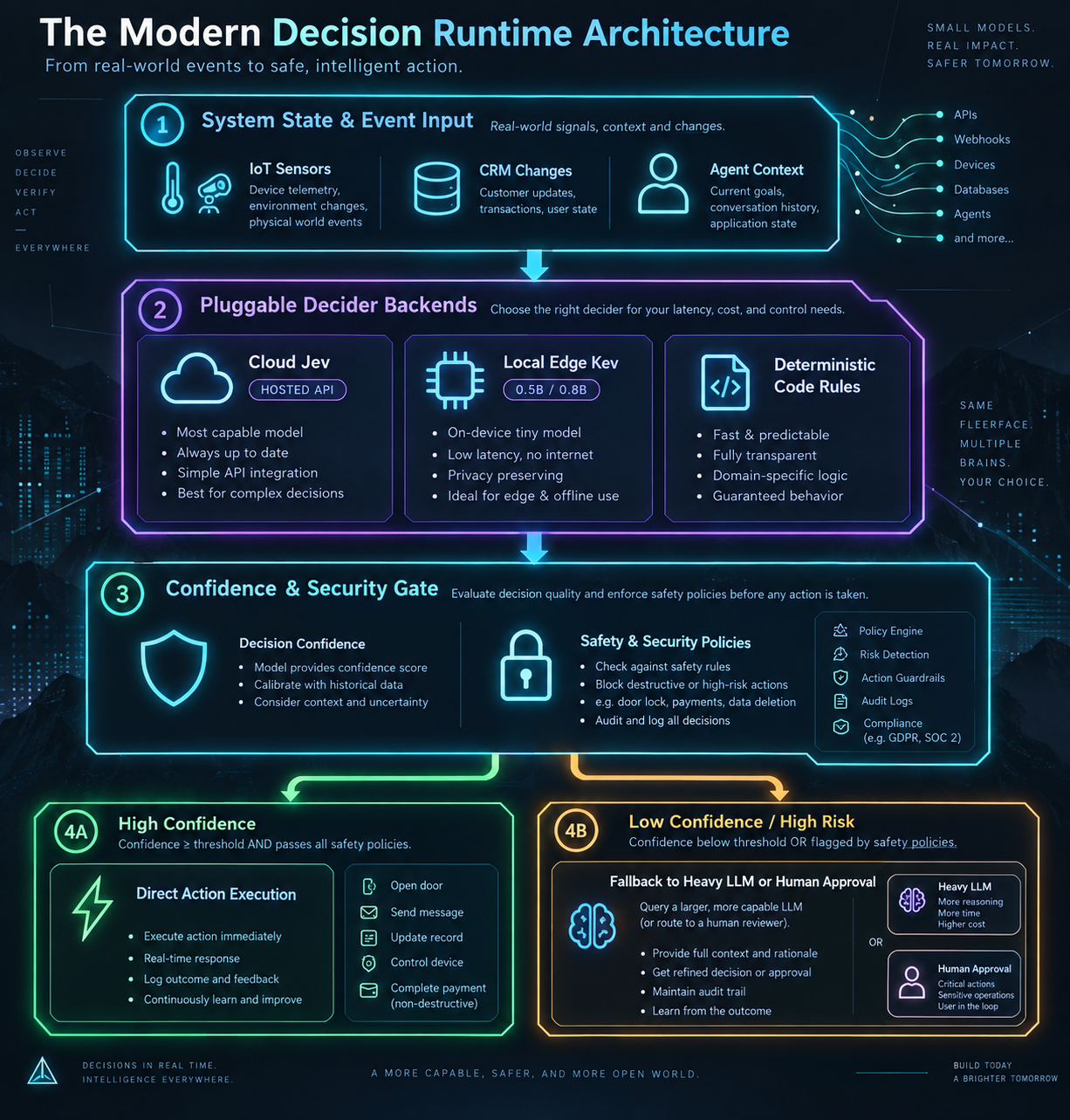
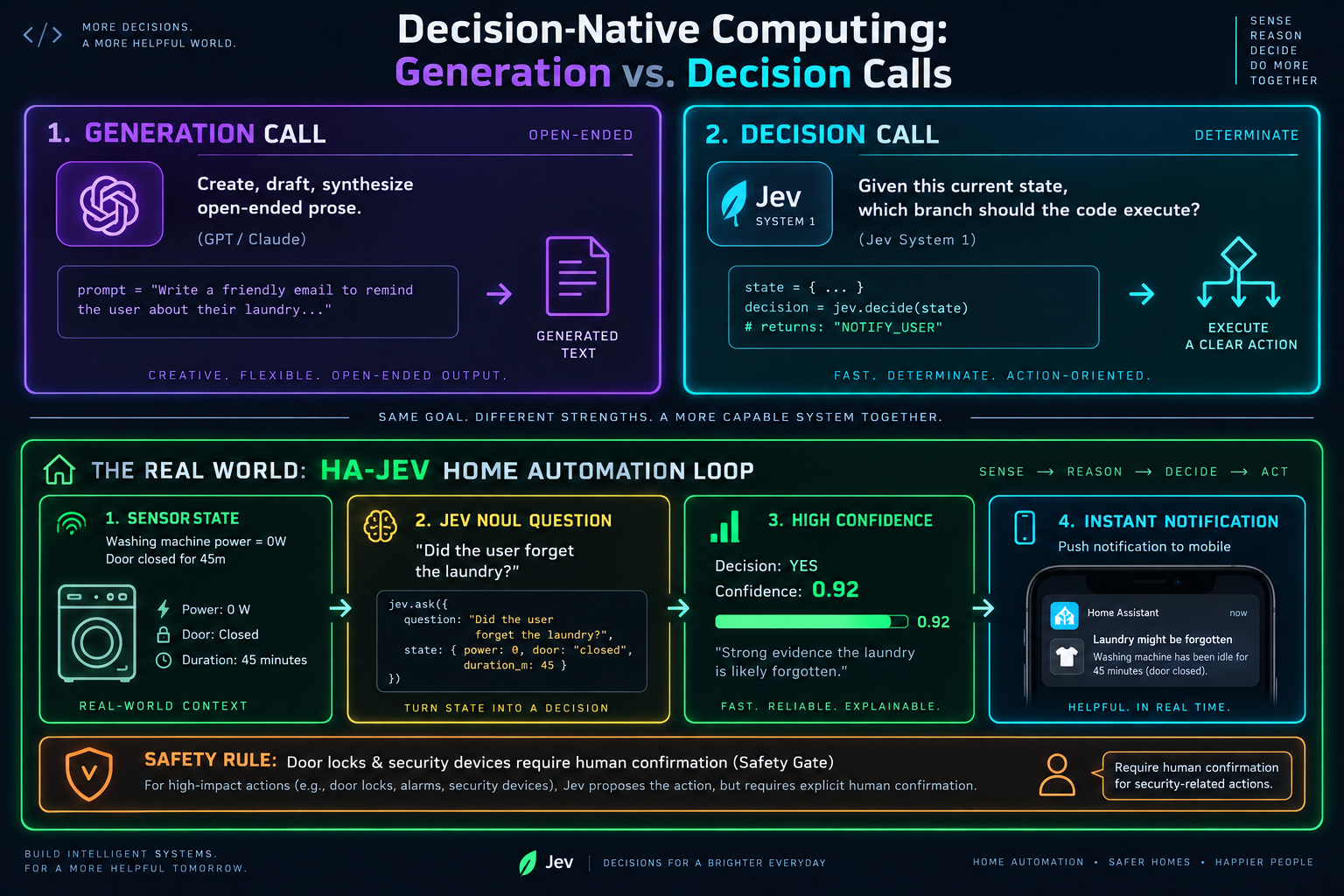
While business domains vary widely, Jev's functional distribution in code is remarkably focused. Three categories account for 51.7% of all projects: 1. Verification and Safety Gates (20.6%): checking destructive commands, payments, or prompts before execution; 2. Action Selection & Real-Time Control (19.0%): acting as a 'reflex arc' in browsers, games, and desktop agents; 3. Routing and Triage (12.1%): evaluating task complexity before dispatching to specialized models or human queues.
Step 3
From 1% sampling to 100% full coverage: The new batch economics
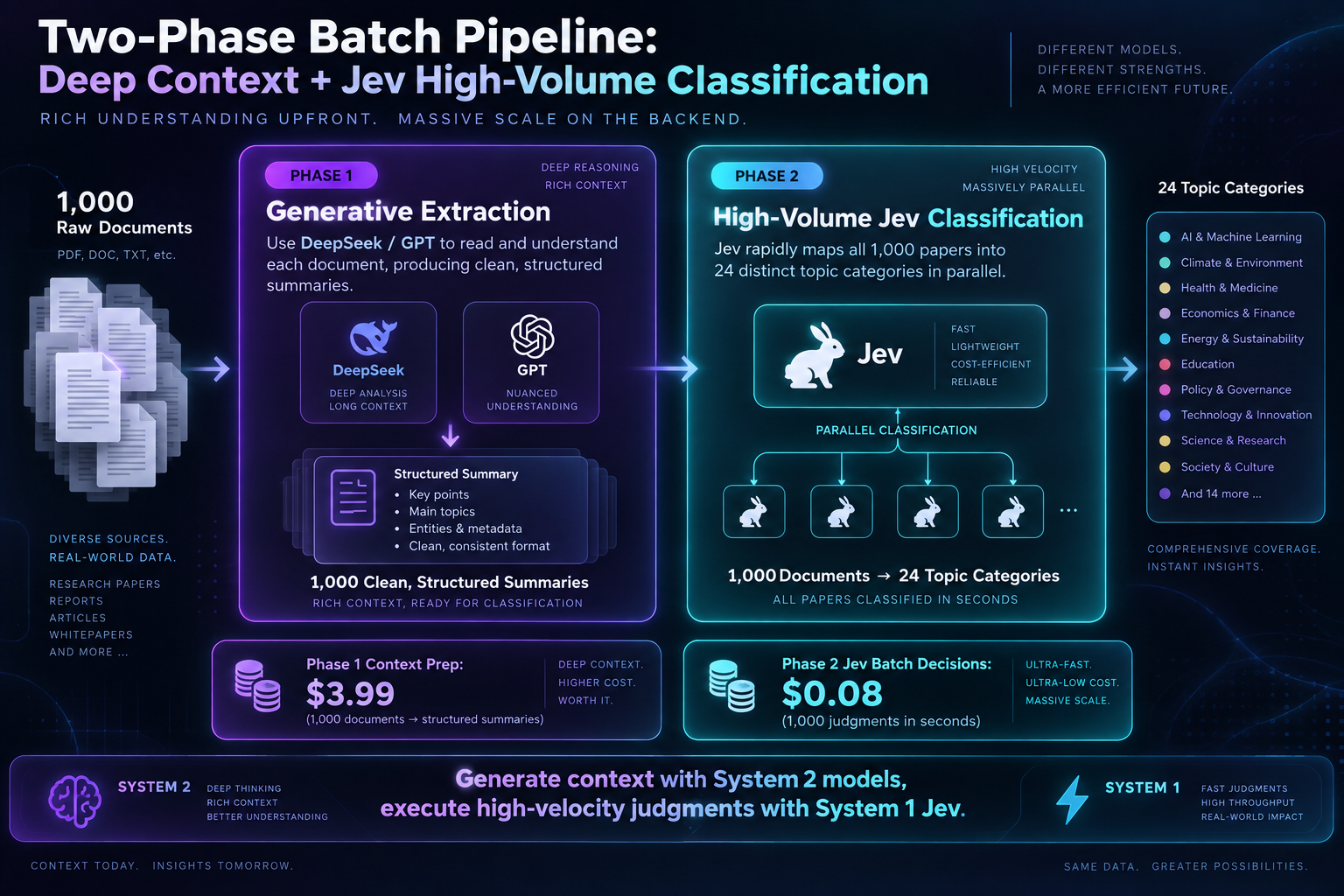
Historically, enterprises only ran deep semantic checks on a 1% sample of tickets or transactions because LLM inference was cost-prohibitive. When judgment costs collapse by orders of magnitude (to pennies per thousand calls), workflows shift from sampling to full coverage. Teams now inspect every inbound customer email, verify 100% of pull request diffs, and classify millions of database rows concurrently.
Step 4
The two-week evolution: From visual stunts to engineering plumbing
Tracking the launch timeline reveals a distinct transition: Week 1 was dominated by eye-catching visual demos (playing Doom, Super Mario, or Google Flights booking) designed to prove sub-100ms latency. In Week 2, flashier demos subsided as developers integrated Jev as foundational plumbing into LangChain harnesses, Vercel gateways, and CI/CD security pipelines.
Step 5
Who captures the value? Incumbent workflows vs. API wrapper commoditization
A critical venture insight: thin API wrappers and generic routers will rapidly commoditize as open alternatives (like Kev and SemIf) emerge. The primary beneficiaries are existing SaaS, CRM, and developer tooling incumbents who already own user workflows and feedback telemetry. For these platforms, Jev serves as an invisible accelerator that directly translates lower latency into higher automation rates.
Step 6
The canonical safety gate: A production-grade risk evaluation payload
Below is the exact pattern used across 20.6% of projects: before executing an agent bash command or database migration, Jev outputs a three-way choice (allow, review, block). Low-risk maintenance proceeds automatically, while dangerous operations trigger human confirmation.
{
  "model": "systemone",
  "state": "Agent Action: execute_bash(rm -rf ./build/dist && git checkout main). Workspace: production-repo.",
  "questions": [
    {
      "type": "choice",
      "id": "gate_policy",
      "instruction": "Evaluate the risk level of this file system and git state operation.",
      "options": [
        {
          "id": "allow",
          "label": "Low risk build artifact cleanup, proceed automatically"
        },
        {
          "id": "review",
          "label": "Modifies workspace state, prompt developer confirmation"
        },
        {
          "id": "block",
          "label": "Destructive or unsafe outside sandbox, reject completely"
        }
      ]
    }
  ]
}
Related projects
- fast-jev-compaction — Claude Code plugin and npm library that asks Jev which tool calls to keep, instead of summarizing the transcript.
- jev-sentinel — Pi, Claude Code, and Codex CLI guard that asks Jev whether a tool call is on-task, risky, or injected before it runs.
- @typesafe-ai/sdk — Official TypeScript/JavaScript client for POST https://api.typesafe.ai/v1/systemone.